

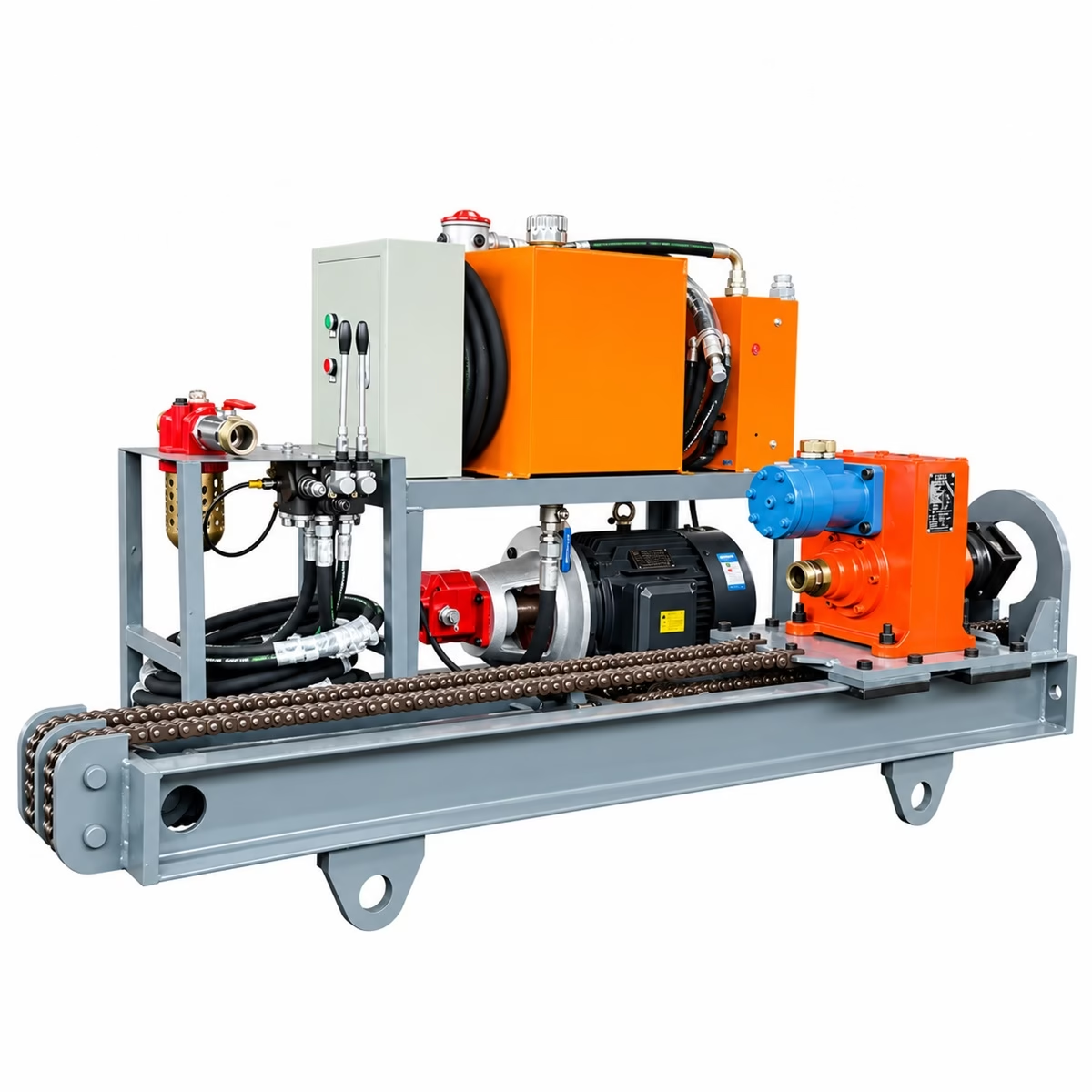
Technical Specifications
| Air Consumption | 6–12 m³/min |
| Drilling Diameter | 90–150 mm |
| DTH Hammer | Optional |
| Drilling Depth | 10–60 m |
| Drill Rod Size | Ø60 × 1500 mm / Ø76 × 1500 mm |
| Maximum Output Torque | 1,800 N·m |
| Maximum Feed Stroke | 1,800 mm |
| Maximum Pullback Force | 80 kN |
| Maximum Feed Force | 60 kN |
| Rated Hydraulic System Pressure | 16 MPa |
| Motor Power | 15 kW |
| Total Rig Weight | 450 kg |
| Rotation Speed | 0–80 rpm |
| Feed Unit Tilting Angle | 10°–90° |
Hydraulic Drilling Configuration & Key Features
Hydraulic Rotation and Feed System
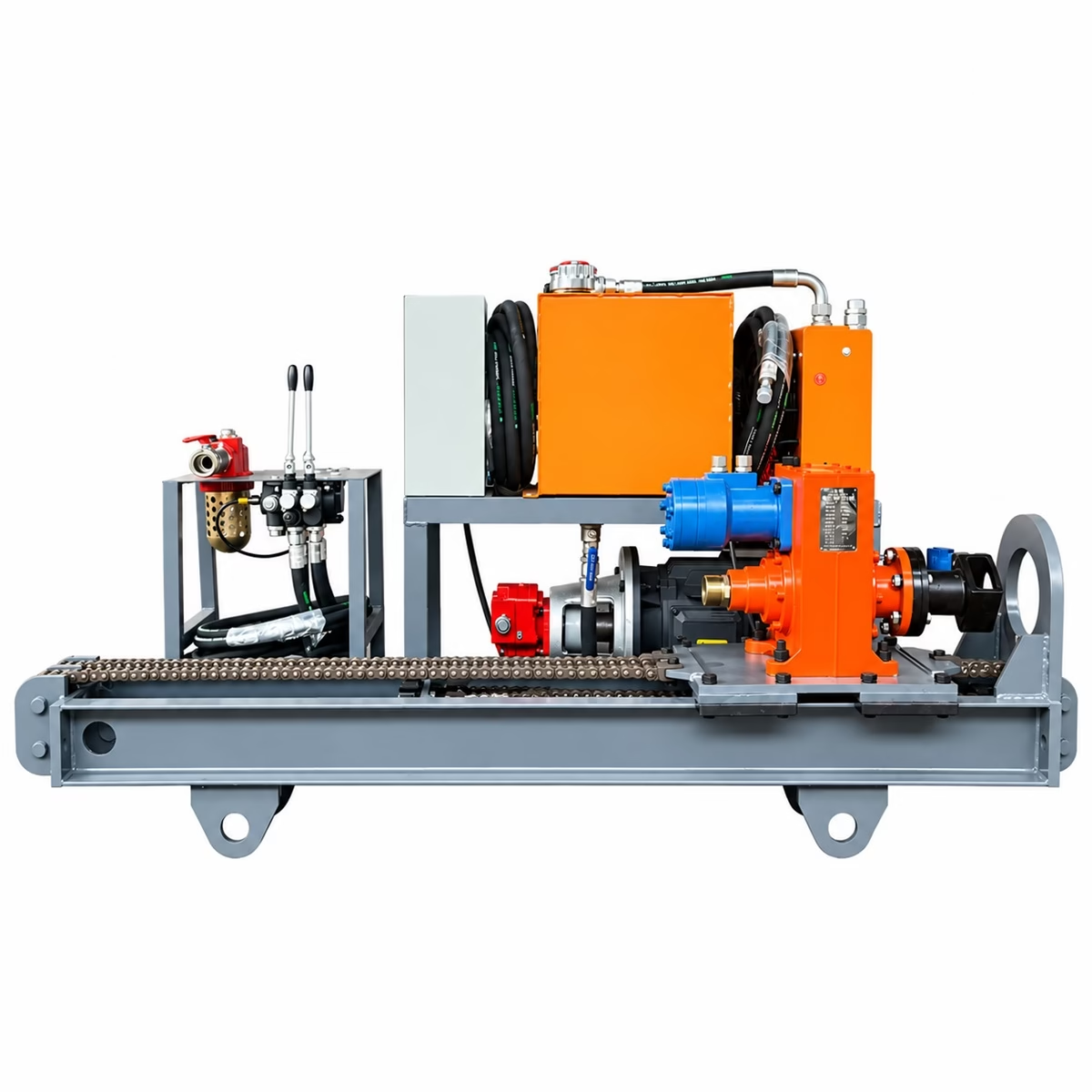
The TD-RIG-ANC-002 features a hydraulic rotation and feed system with a 15 kW motor and a rated hydraulic system pressure of 16 MPa. The rig provides an adjustable rotation speed of 0–80 rpm and a maximum output torque of 1,800 N·m.
Feed and Pullback Capacity
The rig has a specified maximum feed force of 60 kN and a maximum pullback force of 80 kN. These values provide reference parameters for evaluating the rig’s hydraulic feed and withdrawal capabilities in relation to drilling requirements and tool selection.
Long-Version Feed Configuration
The long-version configuration provides a maximum feed stroke of 1,800 mm and supports Ø60 × 1500 mm and Ø76 × 1500 mm drill rods. Compared with the short-version model, it accommodates longer specified rod sections and provides an additional 600 mm of feed stroke.
Drilling Diameter and Depth
The published specifications list a drilling diameter range of 90–150 mm and a drilling depth range of 10–60 m. Actual drilling performance depends on ground conditions, drilling tools, and the selected operating configuration.
Adjustable Feed Unit
The feed unit has a specified tilting angle range of 10°–90°, allowing the drilling assembly to be positioned according to the required borehole orientation and site setup.
Optional DTH Hammer Configuration
A DTH hammer is listed as optional equipment, with a specified air consumption range of 6–12 m³/min. Hammer selection, drill rod connections, and compressed-air requirements should be confirmed according to the intended drilling diameter and operating conditions.
Anchor Drilling Applications & Operating Requirements
Anchor Borehole Drilling
The TD-RIG-ANC-002 is designed for anchor drilling operations requiring hydraulic rotation and feed. Its published drilling diameter range of 90–150 mm and drilling depth range of 10–60 m provide reference parameters for evaluating the rig against project borehole requirements. Actual performance depends on ground conditions, drilling tools, and the selected drilling method.
Long-Feed Drilling Configuration
The long-version rig provides a maximum feed stroke of 1,800 mm and supports Ø60 × 1500 mm and Ø76 × 1500 mm drill rods. This configuration can be considered for drilling procedures that require longer rod sections and sufficient operating clearance. Compared with the short-version model, it offers an additional 600 mm of feed stroke, although the overall drilling depth range remains the same.
Drilling at Different Inclinations
The feed unit has a specified tilting angle range of 10°–90°, allowing the drilling assembly to be positioned for different borehole orientations. The required drilling inclination, equipment installation position, and available site clearance should be reviewed before selecting the rig.
Drilling Tool and Air Supply Selection
A DTH hammer is listed as optional equipment, with a specified air consumption range of 6–12 m³/min. Buyers considering DTH drilling should confirm hammer compatibility, drill rod connections, operating air pressure, and compressor requirements. The appropriate configuration depends on the intended borehole diameter and ground conditions.
Project and Equipment Selection Considerations
Before selecting the TD-RIG-ANC-002, buyers should provide the required drilling diameter and depth, ground conditions, borehole orientation, available working space, and preferred drilling tools. The rig’s 15 kW motor, 1,800 N·m maximum output torque, 60 kN maximum feed force, and 80 kN maximum pullback force should be evaluated together with these requirements.
Frequently Asked Questions
01What drilling diameter and depth does the TD-RIG-ANC-002 support?
The TD-RIG-ANC-002 has a specified drilling diameter range of 90–150 mm and a drilling depth range of 10–60 m. These values are based on the manufacturer’s published specifications. Actual drilling performance depends on ground conditions, drilling tools, and the selected operating configuration.
02How does the long-version anchor drilling rig differ from the short-version model?
The long-version TD-RIG-ANC-002 has a 15 kW motor, a maximum feed stroke of 1,800 mm, and supports 1,500 mm drill rods. The short-version TD-RIG-ANC-001 has an 11 kW motor, a 1,200 mm maximum feed stroke, and supports 1,000 mm drill rods. Both models have a specified maximum output torque of 1,800 N·m and the same published drilling depth range of 10–60 m. Selection should consider the required rod length, feed stroke, and available working space.
03What are the feed and pullback force specifications of the TD-RIG-ANC-002?
The TD-RIG-ANC-002 provides a specified maximum feed force of 60 kN and a maximum pullback force of 80 kN. These values are the same as those listed for the short-version model. The long version’s greater feed stroke does not change its published maximum feed or pullback force ratings.
04Can the TD-RIG-ANC-002 be configured for DTH drilling?
The manufacturer’s specifications list a DTH hammer as optional equipment and specify an air consumption range of 6–12 m³/min. For a DTH drilling configuration, the hammer model, drill rod connections, operating air pressure, and compressor capacity should be confirmed before ordering. A DTH hammer should not be assumed to be included in the standard equipment package.
05What information is needed to request a quotation for the TD-RIG-ANC-002?
Please provide the required borehole diameter and depth, ground conditions, drilling inclination, available working space, and preferred drill rod size. If DTH drilling is required, include the intended hammer configuration and available compressed-air supply. Buyers should also specify whether drilling tools, accessories, or other optional equipment are needed so that the proposed configuration can be reviewed before quotation.
Related Products
Start Your Project
Connect with TitanDrill engineering experts for custom technical configurations and global quote response.